
habits of the creative mind 2nd edition pdf free
Dive into the habits of highly creative people! Get inspired & boost your innovation with insights from the 2nd edition. Find your creative mindset now!
Habits of the Creative Mind 2nd Edition PDF Free: A Comprehensive Guide
Discover innovation and problem-solving skills with the downloadable PDF! Explore a portable, affordable text centered on ten habits for curious, thoughtful writing.
Understanding the Core Concepts
Richard E; Miller and Ann Jurecic’s “Habits of the Creative Mind” (2nd Edition) delves into ten essential habits fostering curious, reflective, and thoughtful writing. This resource isn’t about innate talent, but cultivatable practices. It emphasizes developing craft, engaging persistently with challenges, envisioning possibilities, and keen observation – skills applicable beyond writing.
The book, often sought as a free PDF, champions a mindset shift. It encourages modifying opinions based on evidence, counteracting restrictive thought patterns, and embracing a free and open mind. It’s a guide to unlocking creative potential through deliberate practice, offering a comprehensive approach to enhancing innovation and problem-solving abilities. The 1982 Baltimore Museum of Art exhibition featuring Bruce Nauman’s work subtly underscores the importance of artistic exploration.
The Significance of the “Habits of the Creative Mind”
“Habits of the Creative Mind” transcends a typical writing guide; it’s a framework for cultivating a creative process. Its significance lies in democratizing creativity, asserting it’s not a gift, but a skillset honed through practice. The ten core habits – observation, envisioning, persistence, and craft – are universally applicable, benefiting students and professionals alike.
The book’s enduring relevance is reflected in the continued search for a free PDF version. It provides tools for unleashing team potential, utilizing techniques like mind mapping and AI-powered meeting notes. Furthermore, it encourages a willingness to challenge assumptions and modify beliefs with new evidence, fostering intellectual humility and open-mindedness – crucial for innovation.
Where to Find the PDF – Legitimate Sources
Locating a free, legitimate PDF of “Habits of the Creative Mind” requires caution. While demand fuels searches, respecting copyright is paramount. Project Gutenberg offers a vast library of public domain eBooks, but this specific title isn’t currently available there. Z-Library is mentioned as a resource, though its legality and reliability should be carefully considered.
Exploring official publisher websites (Bedford/St. Martins) or university library databases are the most ethical avenues. Often, institutions provide access to digital textbooks. Beware of unofficial download sites, as they may contain malware or pirated content. Prioritize legal access to support authors and ensure quality resources.
Project Gutenberg and Public Domain eBooks
Project Gutenberg stands as a remarkable online library, boasting over 60,000 free eBooks residing in the public domain. This treasure trove encompasses classic literature and significant historical documents, all available as downloadable PDF files compatible with various devices. However, it’s crucial to note that “Habits of the Creative Mind” by Miller and Jurecic, being a more recent publication (2023), is not presently included within Project Gutenberg’s collection.
The platform’s strength lies in older works where copyright has expired. While a valuable resource for many, those seeking the 2nd edition PDF will need to explore alternative, legitimate sources, respecting intellectual property rights.
Z-Library and eBook Resources
Z-Library presents itself as a resource for locating summaries, reviews, and potentially accessing “Habits of the Creative Mind” in ebook format. Users can search for the title and explore available resources, including the possibility of reading it online. However, it’s vital to exercise caution when utilizing such platforms.
Z-Library’s legality has been contested, and accessing copyrighted material through it may infringe upon intellectual property rights. While offering convenience, users should prioritize legitimate sources to support authors and publishers. Always verify the source’s credibility and legality before downloading or accessing any content.
The Baltimore Museum of Art Exhibition (1982) & Bruce Nauman
Interestingly, a book related to creative thought was published alongside the 1982 exhibition featuring Bruce Nauman at the Baltimore Museum of Art; Titled “NAUMAN, BRUCE: THE TRUE ARTIST,” this publication offered a comprehensive overview of the artist’s work and likely explored the creative processes behind it.
While not directly linked to the “Habits of the Creative Mind” 2nd edition PDF, the exhibition and accompanying book demonstrate a historical interest in understanding artistic creativity. Exploring resources from this era can provide valuable context and inspiration for developing one’s own creative habits and reflective practices.

Ten Habits for Curious and Reflective Writing

This text centers on ten habits that encourage curious, thoughtful, and reflective writing – essential for unlocking creative potential and improving craft.
Focus on the Ten Core Habits
The “Habits of the Creative Mind” emphasizes a focused approach to writing, built around ten core habits designed to foster curiosity and reflective thought. This portable and affordable text isn’t just about what to write, but how to approach the writing process itself. These habits aren’t rigid rules, but rather guiding principles to cultivate a more engaged and insightful creative practice.
Developing these habits allows writers to move beyond simply fulfilling assignments and towards genuine exploration of ideas. The book encourages a persistent engagement with challenges, envisioning possibilities, and keen observation – all crucial elements for unlocking innovative thinking. By concentrating on these ten habits, writers can build a strong foundation for continuous growth and improvement in their craft.
Developing Craft in Creative Work
“Habits of the Creative Mind” highlights that developing craft isn’t merely about technical skill, but a continuous process of refinement and exploration. It’s about understanding the tools of writing – language, structure, and style – and learning how to wield them effectively to convey meaning and evoke emotion. The text encourages a deliberate practice, focusing on consistent effort and a willingness to experiment.
This involves actively seeking feedback, analyzing successful writing, and embracing revision as an integral part of the creative process. The book emphasizes that true mastery comes not from innate talent, but from dedicated work and a commitment to honing one’s abilities. It’s a journey of continuous learning and self-improvement, fueled by curiosity and a passion for the craft.
Engaging and Persisting Through Challenges
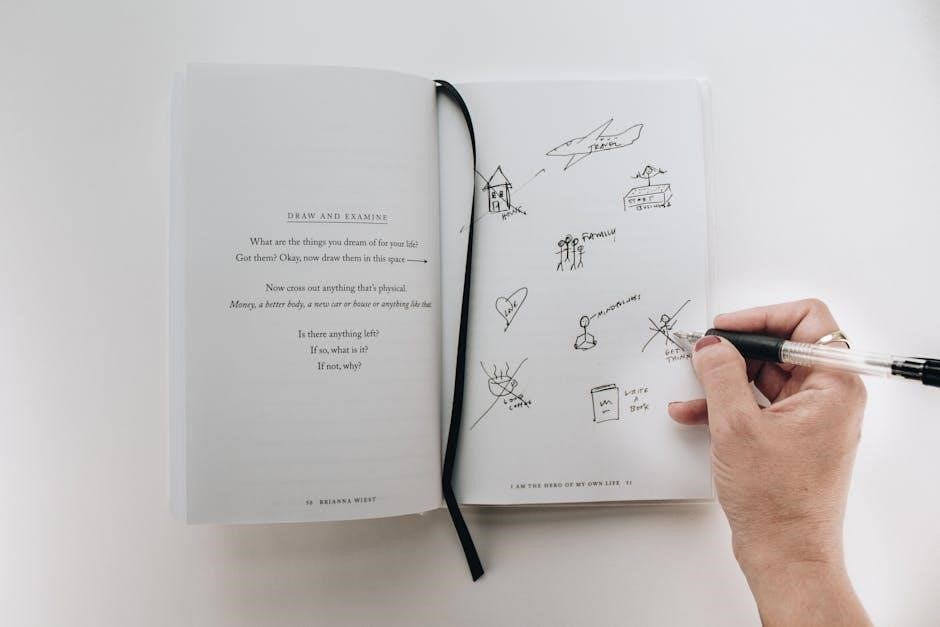
“Habits of the Creative Mind” underscores that creative work is rarely linear; it’s often punctuated by obstacles, setbacks, and moments of doubt. The ability to engage with these challenges – to persist through frustration and uncertainty – is crucial for success. This involves cultivating resilience, embracing failure as a learning opportunity, and maintaining a commitment to the project despite difficulties.
The book advocates for strategies like breaking down large tasks into smaller, manageable steps, seeking support from peers, and reframing challenges as opportunities for growth. It emphasizes the importance of self-compassion and recognizing that creative blocks are a normal part of the process, not a sign of inadequacy.
Envisioning and Exploring Possibilities
“Habits of the Creative Mind” highlights the power of imaginative thinking and the importance of actively exploring different possibilities. This habit encourages writers to move beyond conventional ideas and consider alternative perspectives, approaches, and solutions. It’s about cultivating a mindset of openness and curiosity, allowing oneself to entertain unconventional thoughts without immediate judgment.
The text suggests techniques like brainstorming, mind mapping, and free writing to stimulate the imagination and generate new ideas. It emphasizes the value of “what if” scenarios and the willingness to experiment with different forms and styles. Envisioning isn’t just about having ideas; it’s about actively developing and refining them through exploration.
The Importance of Observation
“Habits of the Creative Mind” underscores that keen observation is fundamental to creative work. It’s not merely seeing but truly noticing – paying close attention to details, nuances, and patterns in the world around us. This habit encourages writers to engage all their senses and to actively seek out new experiences and perspectives.
The text implies that observation fuels imagination and provides raw material for creative expression. By carefully observing people, places, and events, writers can develop a deeper understanding of the human condition and the complexities of life. This detailed attention allows for richer, more authentic, and compelling storytelling.

Creative Thinking & Team Potential
Unlock team innovation with best practices! Utilize mind mapping and AI-powered meeting notes to enhance creative thought and collaborative potential.
Best Practices for Unleashing Creative Teams
Fostering a truly creative team environment requires deliberate strategies. Begin by encouraging open communication and a willingness to embrace diverse perspectives – a core tenet explored within the “Habits of the Creative Mind.” Prioritize psychological safety, where team members feel comfortable sharing ideas without fear of judgment.
Implement brainstorming sessions utilizing visualization techniques like mind mapping, transforming notes into clean, organized structures. Leverage AI-powered tools for intelligent meeting notes, capturing key insights and fostering a more focused creative process. Remember, events that inspire unique expression, like creative outfit choices, can also spark innovative thinking.
Ultimately, unlocking potential hinges on cultivating habits of observation, engagement, and a persistent pursuit of possibilities, mirroring the principles detailed in the resource.
Mind Mapping and Visualization Techniques
Harnessing the power of visual thinking is crucial for creative breakthroughs, a concept deeply rooted in the “Habits of the Creative Mind;” Mind mapping serves as a potent tool, allowing teams to visually organize thoughts and explore connections between ideas. Transform transcripts or meeting notes into clean, intuitive mind maps, revealing patterns and fostering a holistic understanding.
Visualization extends beyond mind maps; encourage sketching, storyboarding, or even creating mood boards to represent abstract concepts. These techniques stimulate different parts of the brain, unlocking new perspectives.

By embracing these methods, teams can move beyond linear thinking and tap into the boundless potential of their collective imagination, mirroring the reflective practices advocated within the guide.
AI-Powered Meeting Notes & Creative Thinking
Leveraging artificial intelligence can significantly enhance creative processes, aligning with the principles explored in “Habits of the Creative Mind.” AI-powered meeting notes offer a revolutionary approach to capturing and organizing ideas generated during brainstorming sessions. These tools intelligently transcribe discussions and identify key themes, freeing up participants to focus on active contribution.
Furthermore, AI can assist in transforming these notes into visually engaging formats like mind maps, facilitating a deeper understanding of complex concepts. Notebook, for example, combines intelligent AI notes with visualization, supporting the development of a truly creative thinker.
This synergy between human intellect and artificial intelligence unlocks new levels of innovation.

The Role of a Free and Open Mind
Embrace modifying opinions with new evidence; counteract restrictive thought and laws to foster creativity, aligning with the core principles of open inquiry.
Modifying Opinions with New Evidence
A cornerstone of creative thinking lies in the willingness to challenge pre-conceived notions and adapt perspectives when confronted with compelling evidence. The “Habits of the Creative Mind” emphasizes this crucial skill, encouraging individuals to move beyond rigid beliefs. This intellectual flexibility, as highlighted in related discussions, allows for genuine innovation and problem-solving.
Rejecting the comfort of confirmation bias, a free mind actively seeks out diverse viewpoints and critically evaluates information. This process, vital for both personal growth and collaborative endeavors, is directly linked to unlocking creative potential. The ability to modify opinions isn’t a sign of weakness, but rather a demonstration of intellectual honesty and a commitment to truth – essential traits for any creative thinker.
Ultimately, embracing new evidence fuels a continuous cycle of learning and refinement, propelling creative exploration forward.
Counteracting Restrictive Laws & Thought
The pursuit of creativity often necessitates challenging established norms and questioning restrictive frameworks, both legal and intellectual. A truly creative mind, as fostered by resources like the “Habits of the Creative Mind,” doesn’t passively accept limitations but actively seeks to understand and potentially circumvent them.
This isn’t necessarily about advocating for lawlessness, but rather about recognizing that rigid rules can stifle innovation and independent thought. The text references concerns about laws enforced without due process, highlighting the importance of critical thinking and a willingness to challenge authority when it impedes progress.
Cultivating a mindset that resists restrictive thought patterns is paramount. Embracing open inquiry and diverse perspectives allows for the generation of novel ideas, ultimately pushing the boundaries of what’s possible.

Spending Habits & Creative Expression

Explore the surprising link between financial habits and creativity; events showcase mind-boggling outfit choices, while spending patterns reveal expressive tendencies.
The Connection Between Financial Habits and Creativity
Delving into the intriguing relationship between how we manage our finances and our capacity for creative expression reveals surprising connections. The provided text hints at a noteworthy observation: individuals demonstrate substantial spending, even allocating $3,000 in a single session. This behavior, while seemingly extravagant, can be interpreted as a form of expressive release, a tangible manifestation of creative energy finding an outlet;
Financial habits, therefore, aren’t merely about budgeting or saving; they can be deeply intertwined with our psychological and artistic impulses. A willingness to invest – even in seemingly impulsive purchases – might signify a broader openness to experience and a desire to explore new avenues of self-expression. Understanding this connection offers a fresh perspective on the drivers behind both financial decisions and creative pursuits.
Creative Outfits & Mind-Boggling Expression
The text highlights events brimming with creativity, specifically noting the “mind-boggling” nature of outfit choices. This observation underscores a powerful principle: external expression, like fashion, serves as a vital outlet for internal creative forces; Clothing becomes a canvas, a medium for communicating personality, ideas, and emotions without uttering a single word.
This form of self-expression isn’t frivolous; it’s a demonstration of imaginative thinking and a willingness to break conventional norms. The boldness and originality displayed in these outfits reflect the same qualities needed for innovation in any field. Embracing such expressive freedom can unlock further creative potential, fostering a mindset open to experimentation and unconventional solutions.
The Power of Reading
A good book simultaneously stimulates and frees the mind, offering new perspectives and fostering imagination – essential components of creative thought.
Stimulating and Freeing the Mind Through Literature
Literature serves as a powerful catalyst for unlocking creative potential, mirroring the core principles explored within resources like the “Habits of the Creative Mind” PDF. Immersing oneself in diverse narratives and writing styles expands cognitive flexibility and encourages novel thought patterns.
Accessing free eBooks through platforms like Project Gutenberg provides a wealth of material to fuel imaginative exploration. The act of reading challenges pre-conceived notions and fosters a willingness to modify opinions based on new evidence, a crucial habit for any creative thinker.
Furthermore, literature’s ability to transport us to different worlds and perspectives cultivates empathy and broadens our understanding of the human experience, enriching the creative process.